


News Center
News Center
Moving Towards Intelligent Machine Tools
With the advancement of modern information technologies, particularly the new generation of artificial intelligence, intelligent machine tool technology has entered a new phase of development. Building on the three paradigms of intelligent manufacturing as defined by the Chinese Academy of Engineering, this paper systematically expounds the concept, connotations, characteristics, and architectural framework of intelligent machine tools. It delineates the three evolutionary stages of machine tools—from manual machines to intelligent machines—namely CNC machines, Internet-plus machines, and finally intelligent machines—and provides a detailed analysis of the underlying principles governing the four key intelligent control functions: autonomous sensing and connectivity, autonomous learning and modeling, autonomous optimization and decision-making, and autonomous control and execution. The paper further highlights the intrinsic characteristic of intelligent machine tools: the ability to generate and accumulate knowledge through data-driven learning—and introduces several pioneering enabling technologies, including instruction-domain analysis, hybrid physical–big-data modeling, i-code, and dual-code coordinated control. On the basis of this research, an intelligent CNC system and an industrial prototype of an intelligent machine tool have been developed. Practical applications of three intelligent technologies—machining-quality optimization based on Cyber NC and dual-code coordinated control, process-parameter optimization via big-data modeling, and deep-learning-based modeling and error compensation for machine-tool feed systems—demonstrate that the deep integration of next-generation AI with manufacturing technologies offers a convenient and effective pathway for advancing machine tools from “Internet-plus machines” to “intelligent-plus machines.”
Release time:
2021-08-02

1. Introduction
The core technology of the new industrial revolution is intelligent manufacturing—namely, the digitalization, networking, and intelligentization of the manufacturing sector. As the primary focus of the U.S. Industrial Internet, Germany’s Industry 4.0, and China’s drive for high-quality development in manufacturing, intelligent manufacturing entails the deep integration of advanced information technologies—particularly next-generation artificial intelligence—with manufacturing technologies, thereby advancing the new industrial revolution [1].
Machine tools are the “mother machines” of the manufacturing industry, and their level of intelligence has a significant impact on the implementation of intelligent manufacturing. Accelerating the transition of machine tools toward intelligence and enhancing their智能化 level is not only an urgent requirement for the transformation and upgrading of the machine tool industry, but also a key foundation for building a manufacturing powerhouse [2].
At the end of 2017, the Chinese Academy of Engineering proposed three fundamental paradigms for intelligent manufacturing [1]: digital manufacturing, digital networked manufacturing, and digital networked intelligent manufacturing—representing the next generation of intelligent manufacturing. These paradigms have unified thinking and provided clear guidance for the development of intelligent manufacturing.
In accordance with the three paradigms of intelligent manufacturing and the evolution of machine tools, the transition from traditional manually operated machine tools to intelligent machine tools can likewise be divided into three stages: digitization plus machine tools (numerical control machine tool, NCMT), i.e., CNC machine tools; Internet plus CNC machine tools (smart machine tool, SMT), i.e., Internet-enabled machine tools; and next-generation artificial intelligence plus Internet plus CNC machine tools, i.e., intelligent machine tools (intelligent machine tool, IMT).
The first stage is the CNC machine tool. Its main characteristic is the addition of a CNC system between the operator and the manual machine tool, thereby transferring the physical labor previously performed by the operator to the CNC system.
The second stage is “Internet Plus Machine Tools.” Its defining feature is the integration of information technologies, such as networking, with CNC machine tools, endowing the machines with sensing and connectivity capabilities. As a result, certain human perceptual functions and knowledge-based cognitive tasks are delegated to the CNC system for execution.
The third stage is the intelligent machine tool. Its main characteristic is the integration of next-generation artificial intelligence technologies into CNC machine tools, endowing them with learning capabilities and the ability to generate and accumulate knowledge. Human cognitive labor involved in knowledge acquisition is thereby delegated to the CNC system.
Based on an analysis of the evolution of machine tools, this paper outlines the following research content: Section 2 provides a detailed description of the evolutionary process from conventional machine tools to intelligent machine tools; Section 3 focuses on the control principles of intelligent machine tools—including key enabling technologies—along with their main characteristics and four functional attributes; Section 4 offers a specific discussion of the implementation of intelligent CNC systems and industrial prototypes of intelligent machine tools, and validates the feasibility and effectiveness of intelligent machine tools and related intelligent technologies through case studies of intelligent technology applications; and Section 5 summarizes the entire paper.
2. The Evolution from Machine Tools to Intelligent Machine Tools
A manually operated machine tool (MOMT) represents the earliest form of machine tool and embodies the integration of human operators with the physical machine system. Through perceptual processing and decision-making in the human brain, operators use their hands to control the machine tool and perform part machining. In a manually operated machine tool, the entire machining process—information perception, analysis, decision-making, and operational control—is carried out by the human operator, thus constituting a typical “human–physical system” (HPS) [1]. An abstract representation of the control principle for manually operated machine tools is shown in Figure 1.
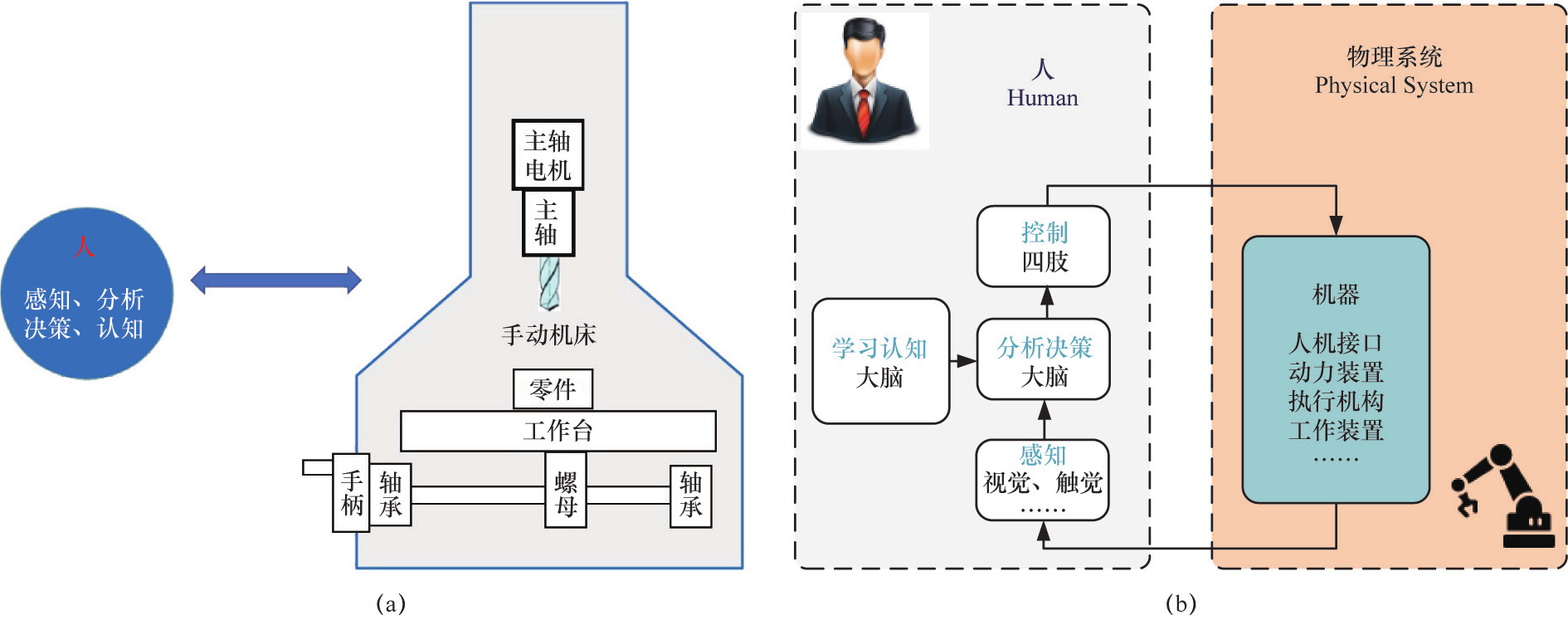
Figure 1. (a) Principle of manual machine tool control; (b) The “human–machine system” (HPS) constituted by a manual machine tool [1].
The evolution of machine tools from manual machines to intelligent machines can be divided into three stages: CNC machines, “Internet Plus” machines, and fully intelligent machines.
2.1. CNC Machine Tools
With the advancement of digital control technology, manual machine tools have evolved into CNC machines. By integrating a CNC system between the operator and the machine tool, machining information is input into the CNC system via G-code, enabling the CNC system to replace human operators in controlling the machine tool’s motion.
A CNC machine tool is a “human–cyber–physical system” (HCPS) [1], in which an information system (the cyber system, i.e., the CNC control system) is interposed between the “human” and the “physical” components. An abstract representation of the control principle of a CNC machine tool is shown in Figure 2.

Figure 2. (a) Control principle of a CNC machine tool; (b) the “Human–Information–Machine System” (HCPS) of a CNC machine tool [1].
Compared with manual machine tools, the fundamental change brought about by CNC machine tools is the introduction of a CNC system between the operator and the physical machine tool. The CNC system plays a crucial role in the machining process, replacing human physical labor and precisely controlling the machine tool to complete the machining tasks.
However, since CNC machine tools rely solely on G-code to control the tool and workpiece trajectories, they lack the capability to perceive, provide feedback on, and learn to model the actual machining conditions—such as cutting forces, inertial forces, frictional forces, vibration, thermal deformation, and environmental variations. This results in discrepancies between the actual tool path and the theoretical path, thereby compromising machining accuracy, surface quality, and production efficiency. Consequently, conventional CNC machine tools exhibit a relatively low level of intelligence.
2.2. Internet Plus Machine Tools
In recent years, with the continuous advancement of “Internet Plus” technologies and the integrated development of the Internet and CNC machine tools [3,4], Internet, IoT, and intelligent sensing technologies have been increasingly applied to remote services, condition monitoring, fault diagnosis, and maintenance management for CNC machine tools, prompting both domestic and international machine tool manufacturers to conduct substantial research and practical implementation [5,6]. Companies such as Mazak, Okuma, DMG-MORI, FANUC, and Shenyang Machine Tool Co., Ltd. have successively launched their own “Internet Plus”-enabled machine tools [7].
“Internet Plus Sensors” is a hallmark of the “Internet Plus Machine Tools” paradigm, primarily addressing the shortcomings of insufficient sensing capabilities and poor interoperability in CNC machine tools.
Compared with conventional CNC machine tools, Internet-plus machine tools are equipped with sensors that enhance their capability to perceive machining conditions; they leverage the Industrial Internet to achieve device connectivity and interoperability, enabling the collection and aggregation of machine tool status data; and they perform analysis and processing on the collected data to implement real-time or non-real-time feedback control of the machining process. An abstract representation of the control principle for Internet-plus machine tools is shown in Figure 3.

Figure 3. (a) Internet-plus machine tool control principle; (b) Digital and networked manufacturing system: “human–information–machine system” [1].
Internet Plus machine tools exhibit a certain level of intelligence, primarily manifested in:
(1) Networked technologies and CNC machine tools are increasingly converging. In 2006, the Association for Manufacturing Technology (AMT) in the United States introduced the MT-Connect protocol to enable interconnection and interoperability among machine tool equipment [8,9]. In 2018, the German Machine Tool Manufacturers’ Association (VDW) developed Umati, a German-specific CNC machine tool connectivity and communication protocol, based on the information model of the OPC Unified Architecture (UA) communication standard [10]. Meanwhile, Huazhong CNC, in collaboration with domestic CNC system manufacturers, proposed the NC-Link connectivity and communication protocol for CNC machine tools, which facilitates the transmission of process parameters, equipment status, business workflows, cross-media information, and manufacturing process information flows throughout the production process.
(2) Manufacturing systems are increasingly evolving toward platform-based architectures. Overseas companies have successively launched technology platforms for big-data processing. For example, GE has introduced Predix, an industrial-internet platform tailored for the manufacturing sector [11], while Siemens has released Mindsphere, an open industrial-cloud platform [12]. Meanwhile, Huazhong CNC has taken the lead in launching a cloud-service platform for CNC systems, providing standardized development and process-module integration methods to support secondary development of CNC systems. At present, these platforms primarily focus on industrial-internet, big-data, and cloud-computing technologies; however, with the advancement of intelligent technologies, they are demonstrating growing potential and trends for application in smart machine tools.
(3) Preliminary demonstration of intelligent functionalities. Abroad, in 2006, Japan’s Mazak Corporation unveiled a CNC machine tool featuring four intelligent functions: active vibration control, intelligent thermal barrier, intelligent safety barrier, and voice prompts. DMG MORI introduced the CELOS application extension open environment. FANUC developed intelligent machine tool control technologies such as intelligent adaptive control, intelligent load monitoring, intelligent spindle acceleration/deceleration, and intelligent thermal management. Heidenhain’s TNC640 CNC system offers intelligent functions including high-speed contour milling, dynamic monitoring, and dynamic high-precision machining. Domestically, Huazhong CNC’s HNC-8 CNC system integrates intelligent functions such as process parameter optimization, error compensation, tool-breakage monitoring, and machine tool health assurance.
Although the “Internet Plus Machine Tools” initiative has been underway for more than a decade and has yielded certain research and practical achievements, to date it has only enabled basic functions such as sensing, analysis, feedback, and control—far short of achieving the level of replacing human intellectual labor. Owing to an over-reliance on human experts for theoretical modeling and data analysis, machine tools lack true intelligence, resulting in slow and arduous knowledge accumulation as well as insufficient adaptability and effectiveness of the technologies. The root cause lies in the fact that substantial breakthroughs have yet to be made in the ability of machine tools to learn autonomously and generate knowledge.
2.3. Intelligent Machine Tools
Since the beginning of the new century, next-generation information technologies—such as mobile internet, big data, cloud computing, and the Internet of Things—have advanced at an unprecedented pace, achieving leapfrog progress on a systemic scale. Central to this wave of technological advancement is the strategic breakthrough in next-generation artificial intelligence, whose defining characteristic is the ability to generate, accumulate, and apply knowledge.
The new generation of intelligent manufacturing technologies, born from the deep integration of next-generation artificial intelligence and advanced manufacturing technologies, has become the core driving force behind the new industrial revolution and has also created significant opportunities for the evolution of machine tools into intelligent machines, thereby enabling true智能化.
An intelligent machine tool is a machine tool that, built upon next-generation information technologies, integrates cutting-edge artificial intelligence and advanced manufacturing technologies in a deeply fused manner. It leverages autonomous sensing and connectivity to acquire data related to the machine tool itself, the machining process, operating conditions, and the surrounding environment; through autonomous learning and modeling, it generates knowledge; and it applies this knowledge to perform autonomous optimization and decision-making, thereby achieving autonomous control and execution. In this way, it enables multi-objective optimized operation of the machining and manufacturing process that is high-quality, highly efficient, safe, reliable, and low-consumption.

Figure 4. Definition of an intelligent machine tool.
By leveraging next-generation artificial intelligence technologies to endow machine tools with the capabilities of knowledge learning, accumulation, and application, the relationship between humans and machine tools has undergone a fundamental transformation, shifting from “giving fish” to “teaching how to fish” [1].
3. Intelligent Machine Tools Based on Next-Generation Artificial Intelligence
3.1. Control Principles of Intelligent Machine Tools
Based on the definition of intelligent machine tools provided in Section 2.3, this paper proposes the principles and implementation schemes for autonomous perception and connectivity, autonomous learning and modeling, autonomous optimization and decision-making, and autonomous control and execution, as illustrated in Figure 5.

Figure 5. Principle of intelligent machine tool control.
3.1.1. Autonomous Perception and Connectivity
The CNC system comprises components such as the CNC controller, servo drives, and servo motors, serving as the core control unit that enables the machine tool to automatically perform cutting operations and other machining tasks. During operation, the CNC system generates a large volume of raw electrical control data internally, consisting of command control signals and feedback signals. These internal control data provide a real-time, quantitative, and precise description of the machine tool’s task (or operating condition) and its current operational state. Consequently, the CNC system functions both as an actuator in the physical domain and as a sensor in the information domain.
The internal electrical control data of the CNC system constitutes the primary source of perception data, encompassing real-time in-machine electrical control information such as G-code interpolation data during part machining—including interpolated position, position-following error, and feed rate—as well as internal electrical control data from servo and motor feedback, such as spindle power, spindle current, and feed-axis current, as illustrated in Figure 5. By automatically fusing this internal CNC control data with data acquired from external sensors—such as temperature, vibration, and vision—and with machining-process data extracted from the G-code—such as cutting width, depth of cut, and material removal rate—the CNC machine tool achieves autonomous perception.
The autonomous perception of intelligent machine tools can establish the correlation between operating conditions and state data through the “command-domain oscilloscope” and the “command-domain analysis method” [3]. By leveraging a big-data aggregation approach based on the “command domain,” machining-process data are collected; NC-Link is then used to enable interconnectivity among machine tools and to aggregate this big data, thereby creating a comprehensive big-data repository spanning the entire lifecycle of the machine tool.
3.1.2. Self-Directed Learning and Modeling
The primary goal of autonomous learning and modeling is to generate knowledge through the learning process. In the context of CNC machining, such knowledge consists of the patterns governing how machine tools input and respond during machining operations. Models and the parameters within them serve as the carriers of this knowledge; the generation of knowledge, therefore, involves establishing these patterns and determining the appropriate parameter values in the models. Leveraging data obtained through autonomous perception and connectivity, and employing next-generation AI algorithm libraries integrated into big-data platforms, knowledge is generated via the learning process.
In the contexts of autonomous learning and modeling, there are three approaches to knowledge generation: theoretical modeling based on the causal relationship between machine tool inputs and responses within a physics-based model; big-data modeling that focuses on the correlations between machine tool task requirements and operational states; and hybrid modeling that integrates machine tool big data with theoretical modeling.
Self-learning and modeling can establish models that encompass the machine tool’s spatial structure, kinematics, geometric errors, thermal errors, CNC machining control, process system, and dynamics; these models can also be shared among machine tools of the same model. Together, these models constitute the machine tool’s digital twin, as shown in Figure 5.
3.1.3. Autonomous Optimization and Decision-Making
The foundation of decision-making is accurate prediction. Upon receiving a new machining task, the machine tool leverages the aforementioned machine tool model to predict its dynamic response. Based on these predictions, multi-objective iterative optimization is conducted across quality enhancement, process optimization, health monitoring, and production management, thereby generating optimal machining decisions and an intelligent control i-code that encapsulates optimization and decision-making information for use in machining optimization. Autonomous optimization and decision-making entail using the model to make predictions, then refining the decision-making process to generate the i-code.
I-code is a crucial enabler for the autonomous optimization and decision-making of CNC machine tools. Unlike traditional G-code, I-code is an intelligent control code for multi-objective optimized machining that corresponds to the instruction domain. It provides a precise description of multi-objective optimization control strategies covering motion planning, dynamic accuracy, machining processes, tool management, and other aspects specific to a given machine tool, and it continuously evolves in response to changes in the status of manufacturing resources. For a detailed explanation of the principles and features of I-code, please refer to the relevant patent [13].
3.1.4. Autonomous Control and Execution
By leveraging dual-code coordinated control—specifically, the synchronous execution of G-code (the first code), which is based on conventional CNC machining geometric trajectory control, and i-code (the second code), which encapsulates multi-objective machining optimization decision-making information—we achieve coordinated control of both G-code and i-code. This enables intelligent machine tools to deliver high-quality, high-efficiency, reliable, safe, and low-consumption CNC machining, as illustrated in Figure 5.
3.2. Characteristics of Intelligent Machine Tools
Compared with CNC machine tools and “Internet Plus” machine tools, intelligent machine tools differ significantly in hardware, software, human–machine interaction modes, control commands, and knowledge acquisition, as detailed in Table 1.
Table 1: CNC Machine Tools, Internet Plus Machine Tools, and Intelligent Machine Tools

3.3. Main Intelligent Functional Features of Smart Machine Tools
Although intelligent machine tools vary widely in their functions, they all share the same overarching objectives: high precision, high efficiency, safety and reliability, and low resource consumption. The智能化 features of machine tools are likewise centered on these four goals and can be categorized into four main types: quality enhancement, process optimization, health monitoring, and production management.
(1) Quality Enhancement: Improving Machining Accuracy and Surface Finish. Enhancing machining accuracy is the primary driving force behind the advancement of machine tools. To this end, intelligent machine tools should be equipped with functions for ensuring and improving machining quality, including: spatial geometric error compensation, thermal error compensation, dynamic prediction and compensation of motion trajectory errors, high-precision curved-surface machining through dual-code coordinated control, and CNC system parameter optimization that prioritizes either dimensional accuracy or surface smoothness.
(2) Process Optimization: Enhancing Machining Efficiency. Process optimization primarily involves adaptive adjustment of machining parameters—such as feed rate and spindle speed—based on the machine tool’s intrinsic physical characteristics and dynamic cutting behavior, in order to achieve specific objectives, including quality prioritization, efficiency prioritization, and machine tool protection. Specific functionalities may include: self-learning/self-evolving machining process databases, modeling of process system response, intelligent process response prediction, evaluation and optimization of machining parameters based on cutting load, and automatic detection and adaptive control of machining vibration.
(3) Health Assurance: Ensuring equipment integrity and safety. Machine tool health assurance primarily addresses the prediction of machine tool life and health management, with the goal of achieving efficient and reliable operation. Intelligent machine tools feature comprehensive health-status indicators at both the system and component levels, as well as a functional toolkit for developing health-assurance capabilities. Specific functions may include: intelligent maintenance of spindles and feed axes; machine-tool health-status monitoring and predictive maintenance; statistical assessment and prediction of machine-tool reliability; and knowledge sharing and self-learning for maintenance.
(4) Production Management: Enhancing Management and Operational Efficiency. Intelligent functions in the production management category are primarily aimed at optimizing machine tool machining processes and reducing resource consumption—both in terms of time and materials—throughout the entire manufacturing process. The intelligent features for production management in smart machine tools are mainly categorized into machine tool condition monitoring, intelligent production management, and machine tool control. Specific functionalities may include: intelligent detection of machining conditions such as tool breakage and chip entanglement; intelligent monitoring of tool wear and damage; intelligent tool life management; intelligent identification and status management of tools, fixtures, and workpieces via ID tags; and low-carbon, intelligent control of auxiliary equipment.
4. Engineering Practice of Intelligent CNC Systems and Intelligent Machine Tools
According to the ternary model of HCPS [14], in CNC machine tool manufacturing practice, the machine tool is the primary entity, the CNC system is the dominant factor, and the human operator is the ultimate controller. From manual machine tools through CNC machines to intelligent machines, the most significant change lies in the progressively enhanced role of the CNC system. The level of intelligence of a machine tool is primarily determined by the intelligence level of its dominant CNC system. Therefore, intelligent machine tools must be equipped with a corresponding intelligent numerical controller (INC).
4.1. Intelligent CNC System
This paper presents the development of an intelligent CNC system engineering prototype—the Huazhong Model 9 INC—whose design scheme and platform architecture are illustrated in Figure 6. Within the INC, the CNC unit, servo drives, motors, and other auxiliary devices constitute the LocalNC, which serves as the local subsystem of the CNC machine tool and implements its real-time control.

Figure 6. INC system architecture.
In addition to performing all the functions of a conventional CNC system, an INC must also possess the most basic sensing capabilities required for intelligent operation, enabling real-time acquisition and transmission of command data, response data, and essential external sensor data (such as temperature, vibration, and video signals) during the control process.
INC leverages the NCUC 2.0 bus to enable perception of multi-source data from servo drives, intelligent modules, external sensors, and other devices. It utilizes NC-Link to connect with CNC machine tools, industrial robots, AGVs, intelligent modules, and other equipment, thereby acquiring big data that is stored on the INC-Cloud platform.
In INC, the primary characteristic is the establishment of physical machine-tool response models to form digital twins, thereby enabling intelligent functionalities. Within the INC architecture, we develop Cyber MT and Cyber NC—digital twin models that correspond to the physical machine tool and the CNC system, respectively. These digital twins can simulate, in a virtual environment, the operational principles and response characteristics of their real-world counterparts: the Physical MT and the Local NC. As a fusion of the physical and cyber domains, INC encompasses not only traditional physical NC systems but also Cyber NC and Cyber MT, which are pivotal to realizing intelligence within the INC framework.
4.2. Intelligent Machine Tool Prototype
Based on the INC intelligent CNC system and centered on the S5H precision machining center, the BL5-C lathe, and the BM8-H milling machine, three industrial prototypes of intelligent machine tools have been developed, as shown in Figure 7, to verify the proposed intelligent enabler technologies from three distinct perspectives.

Figure 7. INC-based intelligent machine tool prototypes: (a) S5H precision machining center; (b) BL5-C intelligent lathe; (c) BM8-H intelligent milling machine.
The S5H precision machine tool features a marble bed and a gantry structure. All feed axes are driven by linear motors and equipped with high-precision optical encoders. It incorporates three independent temperature-control systems to maintain constant temperatures for the spindle, the machine bed, and the coolant. A total of 18 temperature sensors are mounted on the spindle and the bed, while three vibration sensors are installed on the spindle’s front-end bearing and the worktable. The machine tool achieves a positioning accuracy of less than 1 μm and a repeat positioning accuracy of less than 0.5 μm. The S5H precision machining center is used to validate mold-machining quality optimization technologies based on Cyber NC and dual-code coordinated control.
The BL5-C lathe features a slant-bed design and is equipped with, respectively, the machine tool X To and Z Temperature sensors are installed at critical locations such as the feed axes (bearing housings and nut carriers), the spindle (bearings), and the machine bed to monitor temperature variations in the machine tool. Vibration sensors are mounted on the spindle (bearing) housing to measure vibration frequency, and the machine tool X To and Z A grating scale is mounted on the feed axis to enable full closed-loop control. This machine tool achieves a positioning accuracy of less than 6 μm, a repeat positioning accuracy of less than 3 μm, and a roundness of machined workpieces of less than 2 μm. The BL5-C lathe is used to validate technology for optimizing turning process parameters based on big data and deep learning.
The BM8-H milling machine is equipped with a total of nine temperature sensors—three on each of the feed-axis lead-screw nuts, bearing housings, and motor mounts—and four temperature sensors in the spindle housing, all of which are used to monitor thermal deformation of the machine tool. In addition, one triaxial vibration sensor is installed on the spindle and one on the worktable, while high-precision grating scales are mounted on each feed axis to enable full closed-loop control. The machine tool achieves a positioning accuracy of less than 10 μm and a repeat positioning accuracy of less than 8 μm. The BM8-H milling machine is employed to validate hybrid modeling and error-compensation techniques for machine-tool feed systems based on dynamics and deep learning.
4.3. Major Intelligent Application Cases of Smart Machine Tools
4.3.1. Mold Machining Quality Optimization Based on Cyber NC and Dual-Code Integrated Control
This case study was implemented on an INC S5H precision machine tool, using the typical mold trial part—Mercedes (Figure 8)—as a benchmark to verify the effectiveness of digital twin and dual-code collaborative control technologies in optimizing surface quality during freeform surface machining.

Figure 8. Mercedes test specimen.
Based on the geometric and structural parameters of the S5H precision machine tool, a parameter-level digital twin of the CNC system, Cyber NC, is established. The physical CNC unit and Cyber NC are fully equivalent at the interpolation level, with identical interpolation commands generated from surface machining programs.
Prior to actual machining, the mold-machining G-code is simulated and optimized on the Cyber NC system. The optimization objectives are smooth interpolation trajectories and consistent lateral feed rates, and iterative optimization is performed by continuously refining the interpolation trajectory and velocity-planning commands until these objectives are met. Based on the optimization results, i-code instructions are then generated. During actual machining, the G-code and the i-code containing the optimization results are executed concurrently in the CNC system, with dual-code coordinated control ensuring complete machining.
The results before and after optimization are shown in Figure 9. Experimental results demonstrate that the simulation-based twin-model approach combined with dual-code coordinated control can significantly enhance the lateral consistency of the feed rate, thereby improving the surface quality of machined parts. As observed, the optimized parts exhibit clearer features, improved consistency, and a higher degree of conformity to the original CAD model [Figure 9(b)].

Figure 9. Comparison of Region A of the Mercedes test specimen before and after optimization. (a) Feed rate colormap [15]; (b) Machined surface quality.
4.3.2. Optimization of Turning Process Parameters Based on Big Data Learning
In CNC machining, the optimization of process parameters is of paramount importance, as they influence part quality, machining efficiency, and the service life of manufacturing resources such as machine tools and cutting tools [16, 17]. To date, numerous studies have been conducted on process-parameter optimization. One approach involves theoretical modeling of cutting forces, cutting stability, and other factors during the machining process to achieve optimal process parameters [18]. In addition to process-parameter optimization based on theoretical analysis and modeling, big-data–based methods have emerged in recent years [19, 20].
This case study was implemented on an INC BL5-C intelligent lathe, where process data from CNC machining were used to develop a dynamic response model of the machine tool’s process system, thereby validating the feasibility and effectiveness of big-data–based methods for learning, accumulating, and applying machining process knowledge. The specific procedure is as follows:
(1) A BP neural network is employed as the model to characterize the response behavior of the lathe’s process system, with five process parameters—cutting depth, cutting radius, material removal rate, and others—as the input and spindle power as the output, as shown in Figure 10.

Figure 10. BP neural network model for characterizing the process parameters of the BL5-C lathe—spindle power response.
(2) Select commonly produced parts for this type of lathe and perform machining on them, while recording big data from the command domain during the machining process. From the spindle power data, isolate the steady-state data to serve as training samples for the neural network’s output layer. Using command-domain analysis, extract the corresponding cutting parameters for these steady-state samples, including cutting depth, feed rate, material removal rate, spindle speed, and swing radius, and use these as training samples for the neural network’s input layer. Continuously extract steady-state samples to train the neural network model; as machining progresses, the model gradually acquires the ability to predict the machining spindle power, thereby developing a simulation model that replicates the lathe’s spindle power during turning operations.
(3) Before actual machining of new parts—parts that differ in both geometry and process parameters—simulation, iteration, and optimization are first performed using this model. For the parts listed in Table 2, optimization is carried out with respect to machining efficiency, subject to constraints on the maximum allowable spindle power and its fluctuations. The feed rate and spindle power profiles before and after optimization are shown in Figures 11(a) and 11(b), respectively, while the machining times are presented in Table 2. The results indicate that, under the given constraint conditions, the optimized machining time is reduced by 27.8% compared with the unoptimized case.
Table 2 Optimization Results

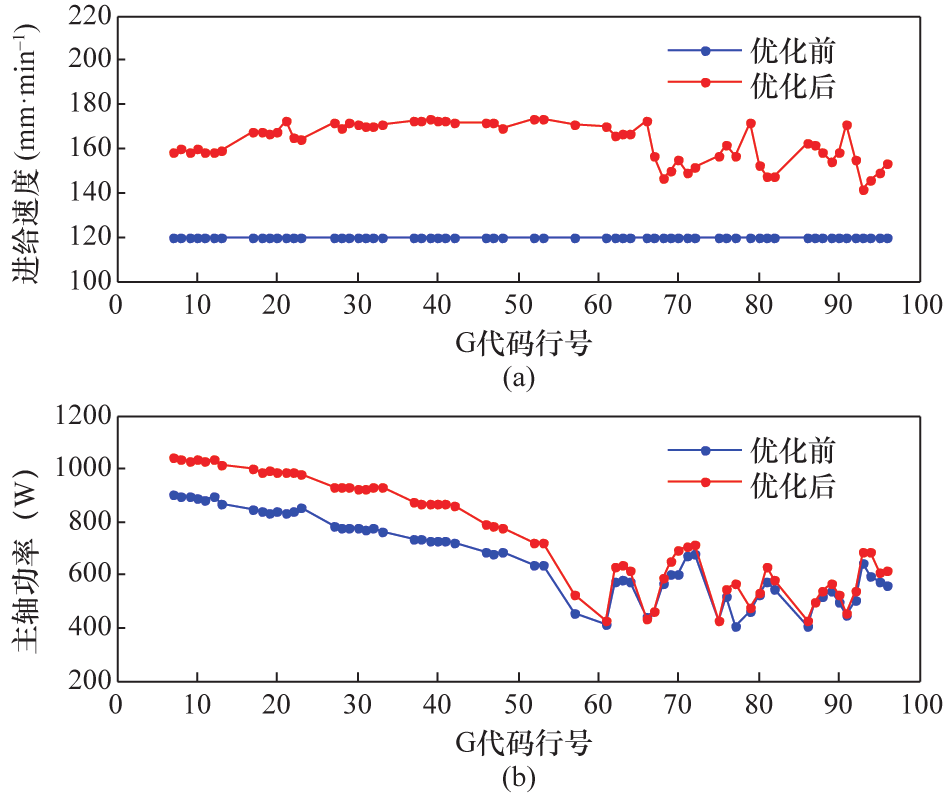
Figure 11. Results before and after optimization. (a) Feed rate; (b) Spindle power.
4.3.3. Hybrid Modeling and Error Compensation for Machine Tool Feed Systems Based on Dynamics and Deep Learning
Modeling the machine tool feed system is fundamental to optimizing control strategies, setting system parameters, and implementing contour error pre-compensation, thereby enhancing the dynamic response performance of the feed system [21, 22]. Based on theoretical analysis, Erkorkmaz and Altintas [23] conducted mathematical and physical analyses of the feed system and employed the unbiased least-squares method along with a friction model to identify dynamic parameters and analyze friction characteristics, thus establishing a feed-system model that guides the design of high-speed feed systems. In contrast to theoretical modeling approaches, some researchers have focused on data-driven modeling methods. Huo and Poo [24] proposed a piecewise linear autoregressive neural-network modeling approach to construct a model of the machine tool feed system; using this model, the actual position response of the machine tool can be predicted from the input command position. Li et al. [25] introduced a data-driven modeling method based on deep belief networks (DBNs) to develop a predictive model for backlash errors.
This case study is implemented on the INC BM8-H intelligent milling machine, where a hybrid modeling approach combining big data analytics and multi-disciplinary theoretical modeling is employed to develop a model of the machine tool’s feed system. The study explores modeling methodologies for the machine tool feed system and assesses the feasibility of implementing compensation based on the simulation results derived from the model. The implementation steps are as follows:
(1) Taking the BM8-H intelligent milling machine as the experimental subject, establish its X and Y A multi-domain theoretical model of the axis worktable is presented. This model encompasses the servo drive, the servo motor, and the worktable along with its mechanical transmission components. Specifically, the models for the servo drive and the servo motor are constructed based on their design parameters. The primary parameters of the mechanical subsystem are listed in Table 3. To accurately identify these parameters, sensitivity analysis is employed to determine the order of parameter identification: parameters with low sensitivity are assigned default values first, and parameter identification proceeds sequentially from high to low sensitivity. The theoretical distribution ranges of the parameters and the resulting identification results are shown in Table 3.
Table 3 Identification Parameters and Their Identification Ranges

Using a radius of 50 mm and a feed rate of 3000 mm·min −1 The circular trajectory was used to validate the prediction accuracy of the model, with the results shown in Figure 12(b), where the maximum profile error was 10.07 µm.

Figure 12. (a) Desired contour, actual contour, dynamics-model simulation contour, and hybrid-model predicted contour for a circular profile; (b) Dynamics-model simulation error (red) and hybrid-model prediction error (blue) for the circular profile.
(2) To further enhance prediction accuracy, a hybrid model as shown in Figure 13 is designed. This model consists of two components: a base model and a bias model. The base model is the multi-domain theoretical model obtained in Step (1). The bias model is a six-layer neural network model, with the input consisting of the command sequence for the feed system and the simulation-predicted sequence from the multi-domain theoretical model, and the output being the sequence of differences between the simulation-predicted values and the measured values. From X , extract samples from the command data and the measured encoder data when the axis worktable is executing various contour trajectories, and then... X 、 Y By training on the deviation models for each axis, their respective deviation models can be obtained.
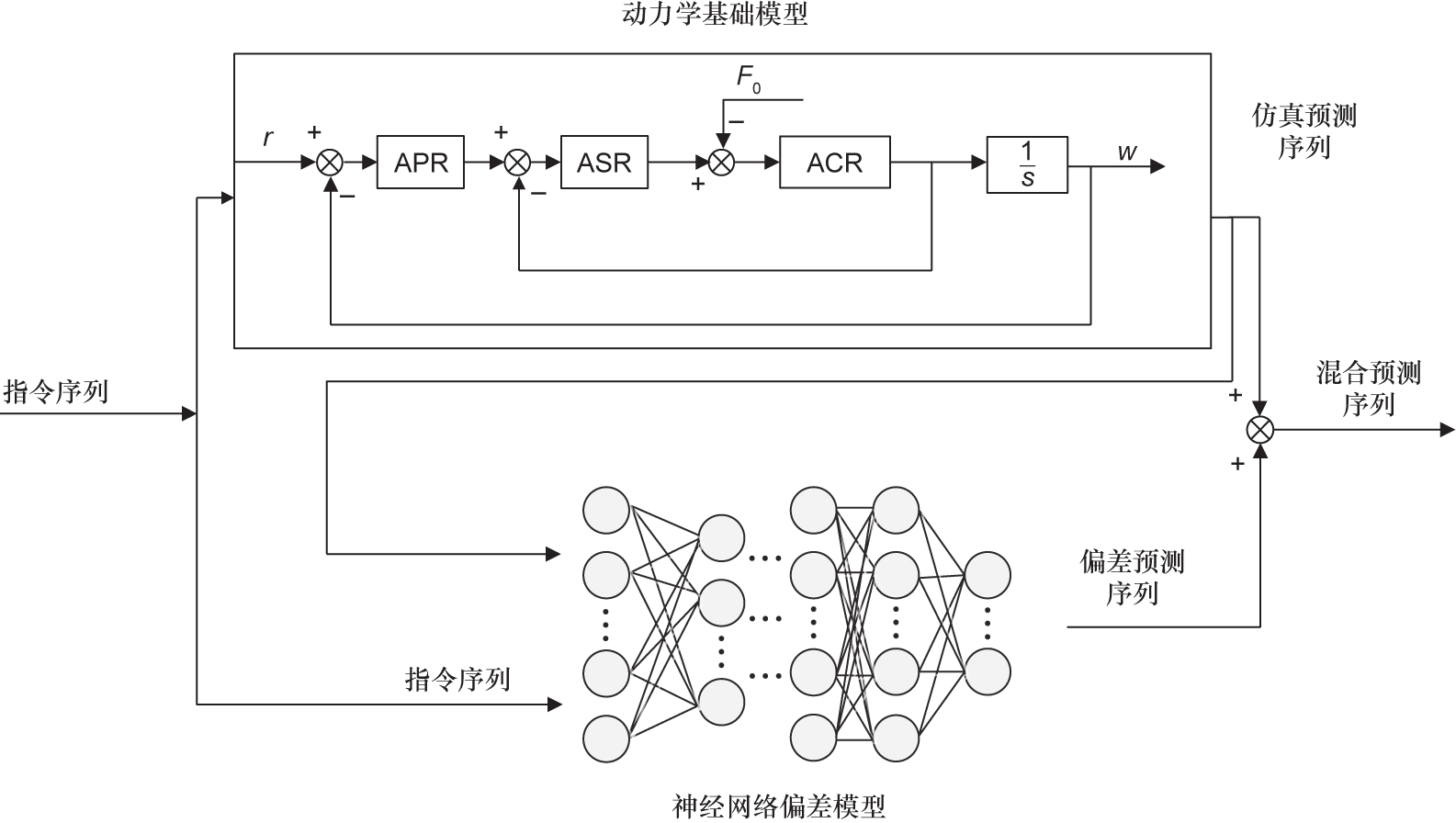
Figure 13. Schematic diagram of the hybrid model of the machine tool feed system.
Among these, the core modules of the base model primarily include the APR (automatic position regulator), ASR (automatic speed regulator), ACR (automatic current regulator), as well as the motor and mechanical transmission components. r For system command input, w For actual output, F 0 As a disturbance input.
(3) As shown in Figure 12(b), the prediction accuracy of contour error is such that the maximum prediction error of the hybrid model is 3.21 µm, which meets the prediction accuracy requirements for compensation in medium-precision machine tools. Positional compensation of circular trajectories based on the predicted contour error is illustrated in Figure 14: the contour error before compensation is approximately 12.53 µm, while after compensation it is reduced to about 4.58 µm—a reduction of 63.4%. These results demonstrate that the hybrid modeling approach, which integrates classical multi-domain modeling with typical artificial-intelligence-based neural-network models, can enhance the motion-control accuracy of machine-tool feed systems.

Figure 14. (a) Nominal circular contour, actual contour before compensation, and actual contour after compensation; (b) Circular contour error (in red) and compensated contour error (in blue).
5. Summary and Outlook
This paper explores the integration and application of next-generation artificial intelligence technologies in CNC machine tools, analyzing the evolutionary trend of machine tools—from traditional CNC machines, through “Internet Plus” machines, to “Intelligence Plus” machines. It investigates the “empowerment” principle whereby big data and AI technologies enable autonomous perception and connectivity, autonomous learning and modeling, autonomous optimization and decision-making, and autonomous control and execution. The study reveals that the essence of machine-tool intelligence lies in the machine’s ability to automatically generate, accumulate, and apply knowledge during its operational life, thereby achieving high quality, high efficiency, reliability, safety, and low resource consumption. To endow CNC machine tools with intelligence, this paper proposes three enabling technologies: instruction-domain analysis, a hybrid digital-twin model, and dual-code collaborative control; designs and develops an engineering prototype of the INC CNC system; and builds three intelligent machine tools. Application validation was conducted on these three intelligent machines, demonstrating that the three proposed enabling technologies are both feasible and advanced, and can significantly improve surface quality in free-form machining (achieving smoother transitions at feature boundaries), enhance machining efficiency (by 27.8%), and reduce contour errors in the feed system (by 63.4%).
The present study represents a preliminary exploration of intelligent machine tools. Future research directions that warrant further investigation include: methods for extracting effective training samples—both positive and negative—from process-accumulated data to support machine-learning modeling; platform technologies for the sharing, collaborative use, and collective intelligence of intelligent machine tools; and the application of AI technologies aligned with the needs of the machine-tool industry in manufacturing practice.
Acknowledgments
We would like to express our special gratitude to Academician Zhou Ji of the Chinese Academy of Engineering for his guidance on this paper. This study was supported by the National Natural Science Foundation of China (projects 51675204 and 51575210) and by Project 04 of the National Key R&D Program (project no. 2018ZX04035002-002).
Smart manufacturing, smart machine tools, intelligent CNC systems, next-generation artificial intelligence
Previous Page
Previous Page
Recent Updates


2026-03-30

2026-02-13

2026-01-31
Contact Us


Room 105, Building 8, Zone 8, Lingxin Market, Jiangning District, Nanjing City